Editor’s Note
As a beverage recipe developer, the biggest mistake I see home bartenders make with the peppermint herb is over-muddling. When you aggressively crush or tear peppermint leaves, they release chlorophyll, which instantly turns your beautifully crafted drink bitter and swampy. The culinary secret is to gently “smack” the leaves between your palms before dropping them into your glass, or lightly press them with a muddler just enough to release their natural aromatic oils.
When you think of the peppermint herb, your mind likely jumps straight to holiday candy canes or toothpaste. But in the world of professional bartending, cafes, and home mixology, peppermint (Mentha × piperita) is one of the most versatile and refreshing ingredients you can keep in your kitchen.
Unlike standard spearmint, which is sweet and mild, peppermint contains a high concentration of menthol. This gives it a sharp, cooling, and intensely refreshing flavor profile that can completely transform a flat beverage into a vibrant, icy experience.
Whether you are trying to soothe your stomach with a warm herbal tea, craft a stunning summer mocktail, or brew an infused syrup for your morning iced coffee, mastering this herb is essential. In this detailed guide, we will break down exactly how to prep, brew, and mix the peppermint herb for cafe-quality drinks at home.
Fresh vs. Dried Peppermint Herb: Which is Best?
To get the most out of your drinks, you need to know when to reach for fresh leaves and when to rely on dried herbs.

Fresh Peppermint
Fresh leaves are best used for cold beverages, aesthetic garnishes, and muddling. The high water content in fresh leaves provides a bright, crisp flavor that perfectly complements citrus juices and sparkling water. Always use fresh peppermint for mojitos, lemonades, and iced lattes.
Dried Peppermint
Dried peppermint herb is intensely concentrated. Because the water has evaporated, the menthol flavor is much stronger and slightly earthier. Dried peppermint should exclusively be used for hot infusions, such as brewing a hot cup of tea or steeping into a hot syrup.
How to Brew the Perfect Peppermint Herb Tea
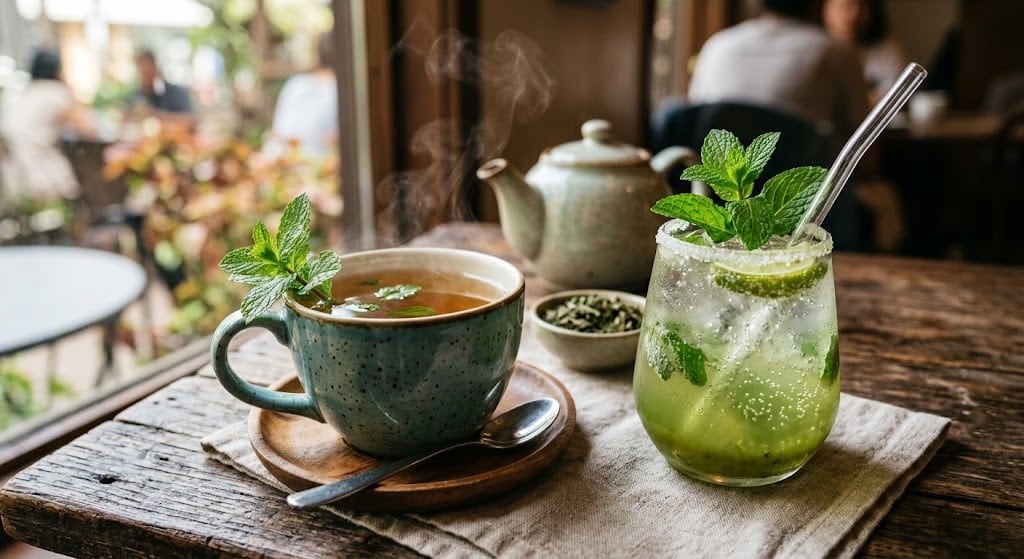
Peppermint tea is famous globally for its digestive benefits. The high menthol content helps relax stomach muscles and relieve bloating. However, brewing it incorrectly can destroy the delicate oils.

The Perfect Brewing Method:
- Boil fresh, filtered water and let it sit for one minute so it is slightly below boiling (around 200°F). Boiling water can burn the herb.
- Place 1 tablespoon of dried peppermint herb (or a handful of slightly bruised fresh leaves) into a mug.
- Pour the hot water over the herbs and cover the mug with a small plate. Covering the mug traps the steam, ensuring the essential menthol oils do not evaporate into the air.
- Steep for 5 to 7 minutes, strain, and sweeten lightly with honey if desired.
Elevating Mocktails and Lemonades
Peppermint is a powerhouse ingredient for summer drinks. Its cooling sensation pairs flawlessly with tart and sweet profiles.
If you are tired of standard mint, try swapping it out in your favorite recipes. The sharp menthol bite of peppermint cuts through heavy sugars, creating a much more balanced drink.
Looking for a refreshing summer cooler? Try replacing the standard mint with peppermint in our viral The Best Strawberry Mint Lemonade Recipe for an extra cooling kick!
The “Smack” Technique for Garnishes
When garnishing a drink, take a fresh sprig of peppermint and smack it firmly against the back of your hand before placing it in the glass. This microscopic bruising releases the aromatic oils. Since the flavor is 80% smell, this ensures that every time you take a sip, you get a massive burst of cooling peppermint aroma.
Crafting a Peppermint Herb Simple Syrup
If you love peppermint mochas or minty craft cocktails, making a peppermint-infused simple syrup is a game-changer. It takes five minutes and is significantly better than artificial store-bought syrups.
Quick Recipe
Combine equal parts water and white sugar in a saucepan. Heat gently until the sugar dissolves. Turn off the heat, add a large handful of fresh peppermint herb, and let it steep as the liquid cools for 45 minutes. Strain the leaves out and store the clear, minty syrup in the fridge.
Not sure how to get the sugar-to-water ratio just right? Read our complete master guide on The Perfect Simple Syrup Ratio for Cocktails & Mocktails.
Love sweet cafe syrups? You can also learn how to make our highly requested Exact Starbucks Vanilla Syrup Recipe at home!
Blending Peppermint into Smoothies and Shakes
You do not have to limit this herb to liquid drinks; it is incredible in blended beverages as well. Adding three to four fresh peppermint leaves into a chocolate or vanilla smoothie gives it an authentic, earthy mint flavor that artificial extracts simply cannot replicate.
Craving a frosty mint dessert? See how peppermint extract and fresh ingredients come together in our ultimate Exact McDonald’s Shamrock Shake Copycat recipe!
How to Store Fresh Peppermint for Drinks
Nothing is worse than buying beautiful fresh herbs only to have them turn black and slimy in your fridge two days later. To keep your peppermint herb crisp and vibrant for weeks, treat it like a bouquet of flowers.
Trim the very bottom of the stems and place the bunch in a glass jar filled with an inch of fresh water. Loosely place a plastic sandwich bag over the top of the leaves like a miniature greenhouse, and store the jar in your refrigerator. Change the water every few days, and your peppermint will stay perfectly fresh for up to three weeks, ready for your next drink.
Conclusion
The peppermint herb is vastly underutilized in home mixology. By understanding the difference between fresh and dried leaves, mastering the gentle muddling technique, and learning how to properly extract its intense menthol oils, you can easily replicate high-end cafe and bar beverages. Whether you are brewing a soothing digestive tea or shaking up a frosty summer mocktail, keep this powerful herb stocked in your kitchen.
FAQs
Can I use peppermint extract instead of the fresh herb in drinks?
You can, but use extreme caution. Peppermint extract is highly concentrated and alcohol-based. While it works well in thick milkshakes or hot chocolates, adding extract to a delicate mocktail or lemonade will make it taste like mouthwash. Stick to fresh leaves for light, watery beverages.
Why does my peppermint tea taste bitter?
Bitterness usually comes from two mistakes: using boiling water that scorches the delicate leaves, or steeping the herb for too long (over 10 minutes). Always use hot, non-boiling water and steep for a maximum of 7 minutes.
What is the difference between peppermint and spearmint in drinks?
Spearmint is sweet, mild, and commonly used in classic Mojitos and Mint Juleps. Peppermint contains significantly more menthol, giving it a sharp, spicy, and intensely cooling flavor.
Can I freeze fresh peppermint herb?
Yes. If you have extra fresh peppermint, chop the leaves, place them in an ice cube tray, cover them with water, and freeze. You can drop these minty ice cubes directly into lemonades, iced teas, or sparkling water for a slow-releasing flavor.
Is it safe to drink peppermint tea every day?
For most people, drinking peppermint tea daily is perfectly safe and highly beneficial for digestion. However, if you suffer from severe acid reflux or GERD, peppermint can relax the esophageal sphincter and make heartburn worse.
Leave a Reply